| Running a small business often feels like wearing all the hats at once – according to the U.S. Chamber of Commerce, 60% of small businesses are not utilizing AI to streamline their processes. From managing finances to handling customer support, and from marketing to web design, there’s always something demanding your attention. But what if you could have a dedicated team member for all those tasks – without having to hire anyone (except Lamb Consulting of course)? The answer lies in the incredible advances in AI tools specifically designed to empower small business owners. This blog post explores how cutting-edge AI tools can revolutionize your small business in three key areas: marketing, website development, and graphic design. |
I’ll admit, I’ve gotten lucky with my own small business and I’m booked solid with clients and projects. The downside is that I find myself turning down a lot of requests from other small business owners. So, this blog post is for them - for those small business owners, nonprofits and solo healthcare providers who might be able to do some of their own marketing work. Hopefully it’s helpful advice and my own recommendations for tools and tips that I’ve learned throughout the past 15+ years consulting with other small business owners and nonprofits. Put One Foot in Front of the Other. In the words of Kris Kringle advising the Warlock, just get started walking forward. Commit to doing one thing to help your business each week or each month - whether it’s writing a blog post (see what I did there), organizing your email contacts, or crafting your own social media posts regularly, you can start the ball rolling on your own marketing. Improve Your Website’s Search Engine Optimization (SEO) SEO is simply the art of improving your rankings with websites like Google. We don’t know the secret recipe to Google’s algorithm but we can play their game and set websites up for success by doing the basics. 2020 - Wow. Here we are, in a decade we couldn’t have imagined back in high school but, thanks to television, had visions of flying cars, robots, and time travel in a DeLoreon. We’ve sort of gotten 2 out of 3 with self-driving cars and Roomba vacuum cleaners (wish I had invented that one). I won’t be holding my breath on the time travel, despite social media’s efforts to remind me what I did last summer. And now, let’s travel back to the topic at hand which is improving your small business website in 2020. I’ve had the luxury of working with scores of varying types of business over the years. I’ve helped countless small psychotherapy practices, chiropractors, small furniture stores, bed and breakfast inns and many nonprofit organizations. There are some things that cross all lines of business, so here’s my attempt to cover most everyone with a few quick recommendations to help you improve your small business website in 2020. 1. Double check all those things you should’ve done in 2019 such as:

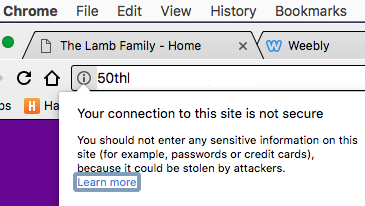
2. ADA accessibility is becoming increasingly important for websites. There are a variety of standards for judging websites but if you’re a small business, you could simply add a widget or plugin to your site (for free) and that will help you become compliant on a basic level. Take a look in the lower right hand corner of my website, debbielamb.com and you’ll see a free tool called UserWay that is easy to add to sites and also provides a free accessibility statement template you can add to your site. You may not realize your website could give some people seizures do to your creative colors or animations and this app could seriously help those with disabilities. To check your website’s web accessibility, you can use webaccessibility.com, a free and easy tool that will even give your website a score and show you where you can improve. Your small business website might start having issues in 2018 if your domain doesn't begin with https:. The reason is that Google has begun lowering the ranking of sites without it. Since Google gets 70-80% of all searches in the U.S., this is important. Years ago, you only needed an SSL certificate (which will convert your site from HTTP to HTTPS) if you were selling something on your site. But now, there are concerns that any website with a form (contact or email signups for example) could be hacked and therefore, require more security. How do you know if your site has SSL security or not? Open your website up in your browser - Chrome, Firefox, Safari, etc. - and look for an exclamation point or error message near your website domain name. The image to the right here shows what it will look like in Chrome if your site has an http: address. How do you fix this HTTPS thing? Many web hosting platforms like Weebly or Wix allow you to simply enable SSL security for free with any paid hosting plan. Once enabled, all you have to do is publish your site. The next thing to do is change your settings in Google Analytics (there's a simple drop down menu for this change) and set up a new site listing in Google Search Console (no, sadly you can't just switch the old one like with Analytics). If you use Wordpress or another web host you may have to purchase an SSL certificate from your domain registrar (i.e. Godaddy or Network Solutions). How urgent is this SSL stuff? Not as urgent as making sure your domain is renewed each year but I'd recommend that no small business end 2018 without having fixed this. Interested in getting help with updating the SSL on your site? Why contact Lamb Consulting of course. Interested in doing it yourself? Here's a good tutorial on Google for you. My responsive website Years ago we were all told our website needed to be mobile friendly but now, it's a Responsive design that's the new big thing. What the heck? In a nutshell, Google now prioritizes responsive websites which are sites using designs that respond to the size of any given screen. This is different from mobile-friendly sites that can actually be two separate sites that look similar. How do you know if your website is responsive? Easy - if you're on a computer, just change the size of your browser window to a smaller sized window. If the website adjusts with the browser, then it's responding to the new size. If it just crops out the site and the website doesn't change to the new size, then you have a non-responsive website. Bonus: You can blog from anywhere For years I have told my own clients to start a blog. That old saying for Physicians to take their own advice? I guess that's me now. So, here we go - Blog post numero uno. And what to write about? Blogs of course! Here's why I tell small businesses and healthcare practitioners to start a blog: do it for google. Very few folks may ever read your blog but the purpose isn't actually for your clients or potential clients, although that's a nice benefit. The purpose is to get more words in front of google and other search engines. Google loves text! The more text on your website, the better. And most small organizations don't have a lot of text on their site. Google ranks sites on the number of applicable words from any given search. The more words, the more potential matches - or the better chance of your site appearing higher in a search. That's it - it's not brain surgery - it's blogging 101. Or, Googling 101? And why Google? Because they receive about 65% to 75% of all online searches in the United States right now, depending on which source you're viewing. The next closest search engine gets about half that amount max (Bing or Yahoo). Start writing your own blog with anything applicable to your business or your client's business. Don't think of it as giving away free advice as much as it is helping folks to find your website and therefore find you! Happy blogging to us all. Need some help? Well, post a comment here in my blog of course! Or, old school, just buzz me! Thanks for reading. |
Lamb Consulting BlogAuthorDebbie Lamb Archives
August 2025
Categories
All
|


RSS Feed